
Write to Boris Kriger directly — he always replies, and he’d be glad to hear from you.
boriskriger@interdisciplinary-institute.org
КЛИКНИТЕ ЗДЕСЬ – ИНФО ОБ АВТОРЕ И КНИГИ НА РУССКОМ
Boris Kriger is a systems theorist whose doctoral work focuses on the general theory of complex systems. This background explains the unusually broad disciplinary range of his publications: stellar astrophysics, cosmology, philosophy of physics, philosophy of science, neuroscience, and consciousness studies are not separate pursuits but applications of a unified systems-theoretic perspective to problems that share deep structural features — phase transitions, epistemic boundaries, identity persistence, and dissemination thresholds in complex systems.
In 2025–2026, this systems-theoretic approach produced its most ambitious application: the αLGQV programme (Local Gravity of Quantum Vacuum) — a two-volume, 1,148-page monograph containing 38 papers that derive 23 observable quantities from a single gravitational action with zero free parameters. The programme rests on the recognition that the Zel’dovich identification of 1967, equating the cosmological constant with quantum vacuum energy, was an assumption, not a theorem. Removing it, and replacing it with a coupling derived from measured QCD sigma terms, reproduces the effects attributed to dark matter and dark energy without invoking either — using only established physics: quantum chromodynamics, general relativity, and E = mc². Eight manuscripts from the programme have been submitted to peer-reviewed journals, including Nuclear Physics B, Physics Letters B, MNRAS, and Astronomy & Astrophysics, and are awaiting editorial review. The complete programme is publicly available with DOI through Zenodo and ResearchGate.
Kriger pursues an effective method of scholarly engagement: upon completing a paper, he sends it directly to the researchers whose work he cites or engages with, accompanied by a substantive question or point of discussion. The responses — from established scientists and philosophers across multiple disciplines — speak for themselves.
Cosmology and Gravitational Physics. George Ellis (University of Cape Town), widely regarded as one of the most important living cosmologists and a co-author with Hawking, responded to Kriger’s paper on inhomogeneous expansion by calling it “an interesting proposal” and indicating he would consult a specialist before responding further. Stanley J. Brodsky (SLAC, Stanford University), originator of the in-hadron condensate framework that establishes QCD condensates as properties of hadrons rather than the vacuum — a result that provides the microphysical foundation for the αLGQV programme — has been contacted regarding collaboration on the gravitational implications of in-hadron condensates. Joan Solà Peracaula (University of Barcelona), whose running vacuum model is one of five independent frameworks cited in the programme’s foundation, is acknowledged in Volume II for critical feedback on the connection between αLGQV and the Running Vacuum Model. Daniel Brown, originator of the Quantum Kinetic Dark Energy (QKDE) framework, engaged in critical correspondence that prompted the explicit derivation of the αLGQV field equations and is acknowledged across multiple papers in both volumes. Bharat Ratra (Kansas State University), a leading figure in dark energy theory, engaged in documented exchanges acknowledged in the programme. Fred R. Klinkhamer (Karlsruhe Institute of Technology), known for work on vacuum energy and the cosmological constant problem, provided detailed correspondence and critical comments that shaped the programme’s development.
Core-Collapse Supernovae and Nucleosynthesis. Thomas Janka (Max Planck Institute for Astrophysics, Garching), one of the world’s foremost authorities on the neutrino-driven supernova explosion mechanism, engaged in a detailed multi-round exchange on Kriger’s paper arguing that neutrino cooling is an absolute precondition for chemical dissemination. Janka initially cautioned that the neutrino mechanism remains observationally unconfirmed and pointed to competing proposals (Soker’s jittering jets, Kushnir’s thermonuclear model). Kriger responded by clarifying that his argument concerns not the explosion mechanism itself but the more fundamental point that without neutrino cooling, no stable proto-neutron star can form — a prerequisite for all proposed explosion mechanisms. Janka accepted the reformulation, writing that he would “agree” with Kriger’s arguments about dissemination and the crucial role of the weak interaction, and that the way Kriger put his idea was “fine.” He concluded by expressing hope that the work would “instigate more deep thoughts.” Janka is further acknowledged in Volume II of the αLGQV programme for documented exchanges on the role of neutrino physics in collapsed objects and the K-Limit. Jorick Vink, the originator of the widely used metallicity-dependent mass-loss scaling (Vink et al. 2001), acknowledged that Kriger’s application of his scaling to explosion efficiency was “an interesting” question, while noting the complexity of the connection in practice.
Philosophy of Physics and Mathematics. John Earman (University of Pittsburgh), one of the foremost philosophers of physics, described Kriger’s paper on Wigner’s puzzle as “a major contribution to understanding Wigner’s puzzle.” Alan Hájek (Australian National University), a leading philosopher of probability, called Kriger’s work on the reference class problem “very interesting” and engaged in a sustained exchange across three separate papers — on probability, Pascal’s Wager, and evaluative asymmetry — offering substantive suggestions (connections to L.A. Paul’s transformative experiences and Richard Pettigrew’s decision theory). Richard Pettigrew (University of Bristol) responded to the same paper on probabilistic reasoning with appreciation. Julian Barbour (Oxford), known for his work on timeless cosmology, provided a detailed technical reply and shared his evolving views on the direction of time — a topic that acquires new significance in the context of the αLGQV Block Universe framework, where the arrow of time emerges as a statistical orientation from irreversible entanglement validation in an atemporal configuration space.
Consciousness and Integrated Information Theory. Pedro Mediano (Imperial College London), a key contributor to the formal computation of integrated information (Φ), provided detailed technical feedback on Kriger’s paper on phase transitions in integration measures. He praised the three-level framework, pointed to specific areas for generalisation, and recommended further literature — then continued the exchange, expressing interest in ongoing collaboration.
Neuroscience and Predictive Processing. Laurent Perrinet (Aix-Marseille University / CNRS), a specialist in predictive processing and neural delays, initiated contact himself after reading Kriger’s essay on the evolutionary inevitability of predictive processing. The exchange developed into a multi-round discussion in which Perrinet confirmed the convergence of their approaches and Kriger integrated Perrinet’s published models into a revised manuscript. Giovanni Pezzulo, a prominent researcher in active inference, wrote that Kriger’s paper “resonates a lot” with his own thinking on the centrality of prediction, and pointed to Daniel Wolpert’s forward models as a complementary foundation.
Stellar Astrophysics. Kriger’s paper “Can a Star Be Proven Single?” prompted responses from multiple leading astronomers, all of whom confirmed the core thesis. Charles Lada (Harvard-Smithsonian), author of the influential claim that most stellar systems are single, wrote a detailed multi-paragraph reply engaging seriously with the epistemological argument and acknowledging that singleness cannot be proven in an unbounded parameter space. José A. Caballero (CARMENES consortium) agreed that singleness cannot be established at 100% confidence. Frédéric Arenou (Gaia mission, Observatoire de Paris / CNRS) confirmed that non-detection cannot establish non-existence and provided detailed technical comments on Gaia’s completeness limits. Simon Portegies Zwart (Leiden Observatory) expressed interest and acknowledged the difficulty of distinguishing primordially single systems from dissolved multiples. Gábor Kovács (Konkoly Observatory) gave a thorough technical explanation of pulsation model assumptions and expressed interest in the forthcoming paper. Vladimir Surdin, a well-known Russian astronomer, confirmed the thesis succinctly: the shortest answer to “Can a Star Be Proven Single?” is “No.”
Exoplanetary Science. Fabo Feng (Shanghai Jiao Tong University), lead author on the Tau Ceti planet candidates, engaged with Kriger’s paper and shared unpublished results on new RV data and Gaia astrometry relevant to the system.
Philosophy of Mind and Identity. Jonathan Schaffer (prominent metaphysician and originator of priority monism) provided a detailed philosophical reply distinguishing existence-dependence from nature-dependence in response to Kriger’s paper on cyclical hierarchy. Tom Froese (OIST), a leading figure in enactive cognitive science, engaged in a substantive multi-round exchange on whether artificial systems can exhibit genuine identity. Avi Kaplan (Temple University), developer of the Dynamic Systems Model of Role Identity, confirmed the alignment of Kriger’s formalisation with his empirical model and expressed enthusiasm for the paper. John Protevi (LSU), a scholar of Deleuze and embodied cognition, responded despite illness and endorsed the productive potential of Kriger’s formalisation of Deleuzian concepts.
On the Method. The practice of sending completed papers directly to the cited authors — rather than waiting for journal placement — has proven to be a productive form of scholarly engagement. In every case recorded here, the recipients responded, often with substantive comments, corrections, or suggestions that were then incorporated into revised manuscripts. Several exchanges developed into ongoing dialogues. The responses confirm that the work is being read and taken seriously by specialists across astrophysics, cosmology, philosophy of science, neuroscience, and consciousness studies — a breadth that reflects not eclecticism but a consistent systems-theoretic lens applied to structurally analogous problems across domains.
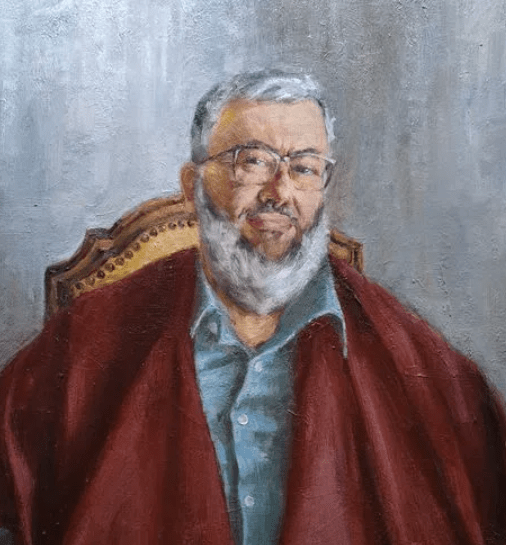
Boris Kriger is known for his passion for intellectual discourse and the exploration of diverse ideas. To share his enthusiasm with others, he created a YouTube channel called Altaspera. On this channel, Kriger invites guests from various backgrounds, including academics, writers, and intellectuals, to participate in stimulating conversations on a range of subjects.
The discussions on Altaspera cover a variety of topics, including philosophy, literature, science, culture, and other timely and relevant issues. Through these dialogues, Kriger seeks to foster a deeper understanding and appreciation of different perspectives and ideas.
The Altaspera channel has gained a dedicated following, with viewers tuning in from around the world to watch these insightful and thought-provoking conversations. Kriger’s commitment to providing a platform for meaningful discourse and exploration of ideas has made Altaspera a valuable resource for those seeking to broaden their intellectual horizons.
For more than a decade, Kriger ran a homeless shelter in his own home. Father Boris also served as an Orthodox priest in Canada.
Boris Kriger is an active critic of the justice, political and social systems around the globe. The founder of a social non-political movement that proposes social reforms taking into account the realities of the 21st century. Reforms are related to the replacement of existing burdensome and inefficient taxation with an adequate universal automatic tax on all financial transactions, guaranteed universal income, referendums, direct democracy, electronic elections, assessment of the qualifications of politicians and voters, the flexibility of laws, based on rational humanism and respect for freedom.
Over the past 20 years, Boris Kriger has been actively writing and publishing his works. Boris Kriger wrote numerous philosophy books, nine novels, several collections of short stories and poems, three books on theology, and three scientific and journalistic works. Books by Boris Kriger were published in English, French, Russian, German, Chinese, Ukrainian, and Hebrew.
Many works by Boris Kriger are available free of charge in the form of audiobooks, and almost everything is available in electronic form on this website. According to the author, he considers creativity to be the gift to the world and does not consider it possible to limit access to his works for personal gain.